
patient character
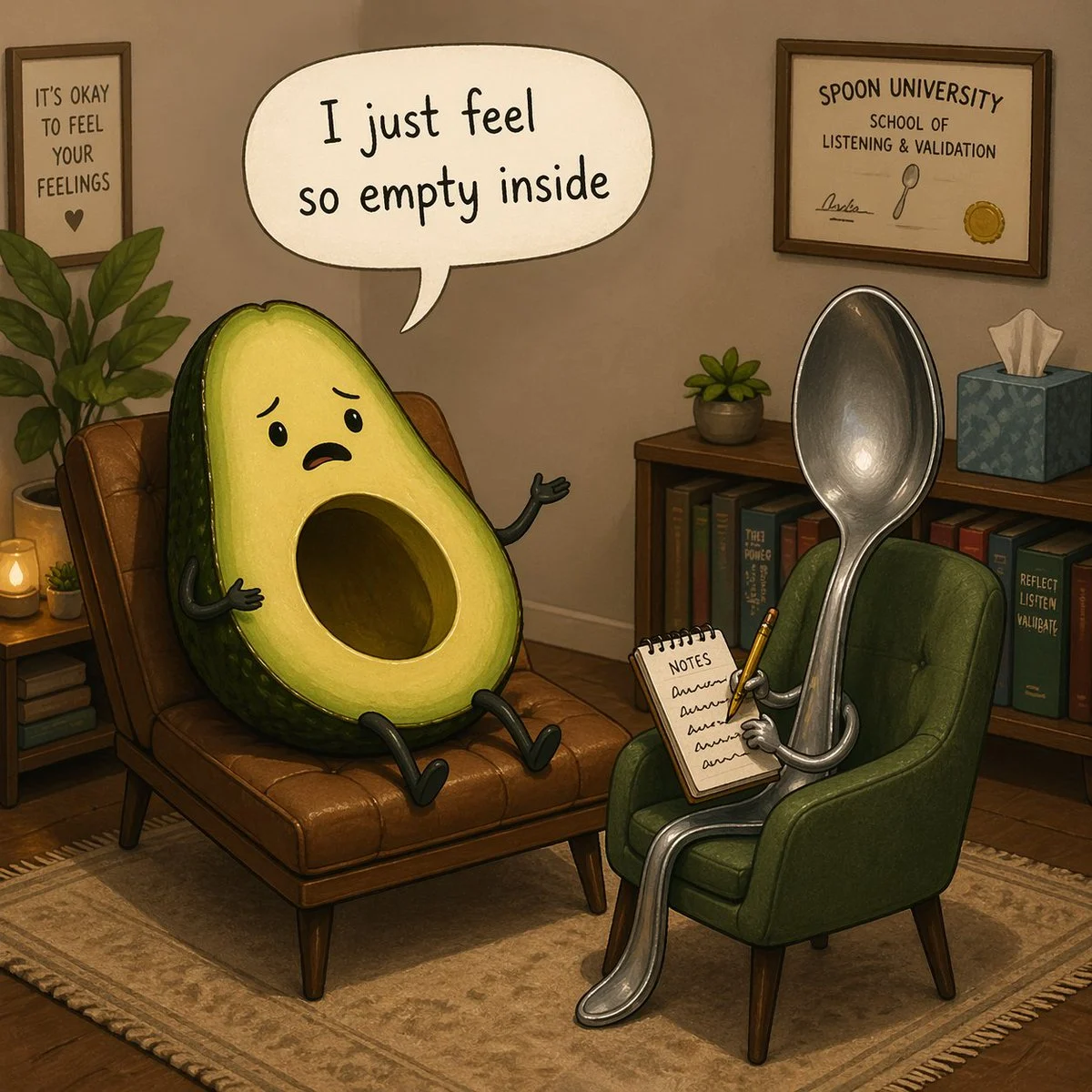
A humorous 3D cartoon illustration of a therapy session in a cozy office. On the left, a {argument name="patient character" default="sad anthropomorphic avocado half missing its pit"} sits on a brown leather lounge chair
AI-generated demonstration · #117 · Anime & Illustrations · 16/9
Prompt
A humorous 3D cartoon illustration of a therapy session in a cozy office. On the left, a {argument name="patient character" default="sad anthropomorphic avocado half missing its pit"} sits on a brown leather lounge chair, gesturing with its thin stick-like arms. A large speech bubble above it reads "{argument name="speech text" default="I just feel so empty inside"}". On the right, the therapist, an {argument name="therapist character" default="anthropomorphic silver spoon"}, sits in a green armchair, holding a yellow pencil and writing on a notepad labeled "NOTES". The room has warm lighting, a beige rug on a wooden floor, and a bookshelf with a tissue box and books, one titled "REFLECT LISTEN VALIDATE". On the left wall hangs a framed poster reading "{argument name="poster text" default="IT'S OKAY TO FEEL YOUR FEELINGS"}" with a small heart. On the right wall hangs a framed diploma reading "{argument name="diploma text" default="SPOON UNIVERSITY SCHOOL OF LISTENING & VALIDATION"}" featuring a small spoon illustration and a gold seal.Style Breakdown
Define the silhouette, line weight, and background depth before adding decorative detail. A restrained palette helps the main subject remain readable.
Recommended Parameters / Aspect Ratio
Start with the template aspect ratio 16/9 to preserve the demonstrated framing. Use a standard preview resolution first, then increase output size after the composition works. Model-specific steps and guidance values are not supplied for this example; use your selected provider's defaults and adjust one setting at a time. Results vary between models.
Review Your Result
Compare the subject outline and focal area at thumbnail size. Reduce competing background elements if the central shape becomes difficult to recognize.
Use Case Scenarios
Use the study for original editorial illustrations, mood boards, or story concepts. Invent characters and settings rather than requesting an existing identity.
Templates demonstrate visual techniques. They are not evidence of real events or endorsements. Use fictional subjects and authorized materials. Report concerns to [email protected].