
Lunar Astronaut T-Shirt Graphic
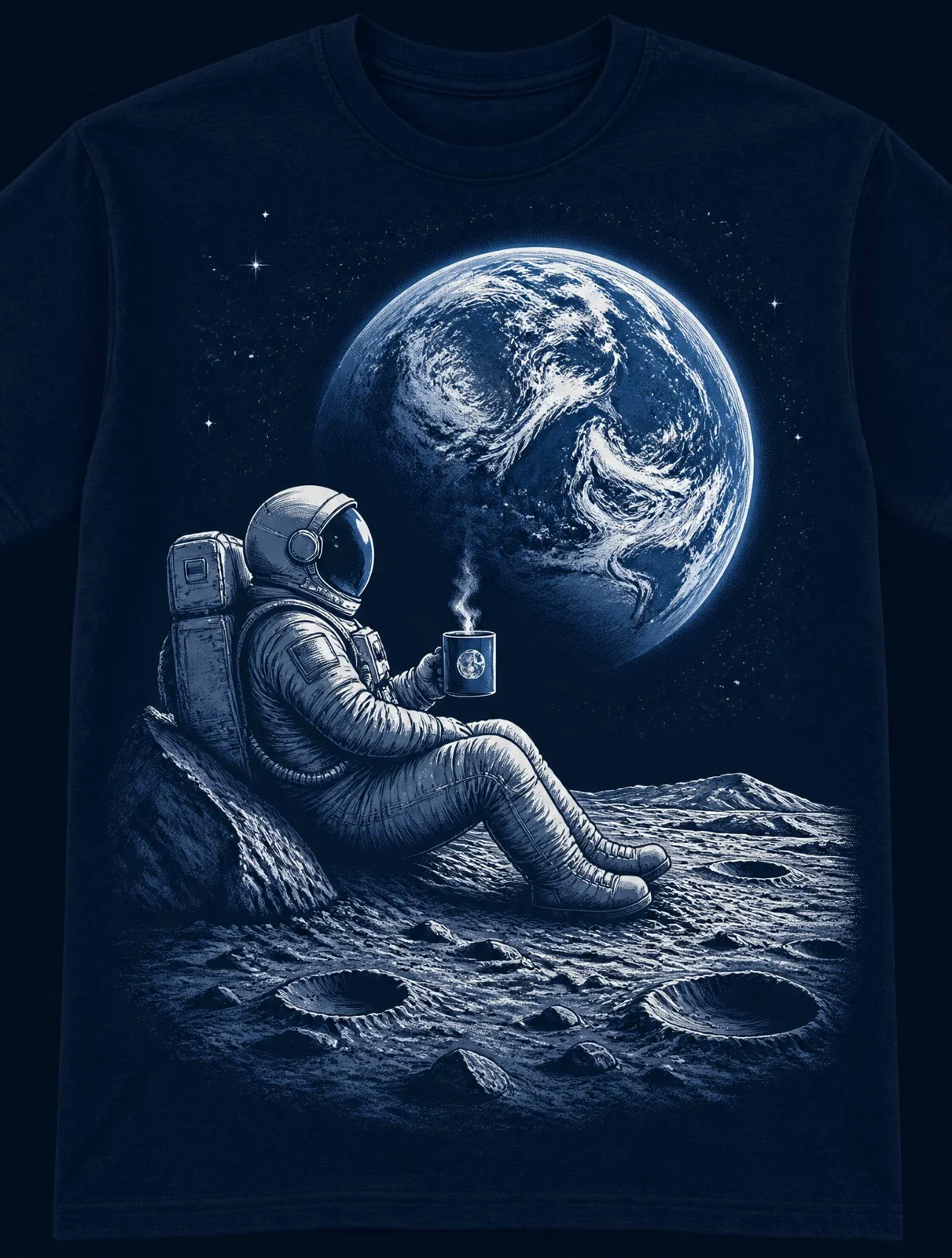
A graphic illustration centered on a dark navy blue t-shirt, depicting an astronaut sitting on the surface of the moon, viewed from a side profile. The astronaut is wearing a detailed, bulky space suit and helmet, leanin
AI-generated demonstration · #520 · Anime & Illustrations · 16/9
Prompt
A graphic illustration centered on a dark navy blue t-shirt, depicting an astronaut sitting on the surface of the moon, viewed from a side profile. The astronaut is wearing a detailed, bulky space suit and helmet, leaning back against a small lunar rock formation, and is holding a small steaming mug, suggesting they are enjoying a peaceful drink. Positioned directly in front of the astronaut in the background is a large, majestic view of the Earth, rendered in shades of white, light blue, and navy, featuring prominent swirling cloud formations. The entire artwork is monochromatic, utilizing a cool blue-and-white color palette that creates a serene, solitary, and contemplative atmosphere. The lunar ground is textured with craters and dust, providing a grounded contrast to the vast, dark sky and the bright, swirling planet above. The style is clean, artistic, and iconic, reminiscent of screen-printed apparel designs.
Style Breakdown
Define the silhouette, line weight, and background depth before adding decorative detail. A restrained palette helps the main subject remain readable.
Recommended Parameters / Aspect Ratio
Start with the template aspect ratio 16/9 to preserve the demonstrated framing. Use a standard preview resolution first, then increase output size after the composition works. Model-specific steps and guidance values are not supplied for this example; use your selected provider's defaults and adjust one setting at a time. Results vary between models.
Review Your Result
Compare the subject outline and focal area at thumbnail size. Reduce competing background elements if the central shape becomes difficult to recognize.
Use Case Scenarios
Use the study for original editorial illustrations, mood boards, or story concepts. Invent characters and settings rather than requesting an existing identity.
Templates demonstrate visual techniques. They are not evidence of real events or endorsements. Use fictional subjects and authorized materials. Report concerns to [email protected].